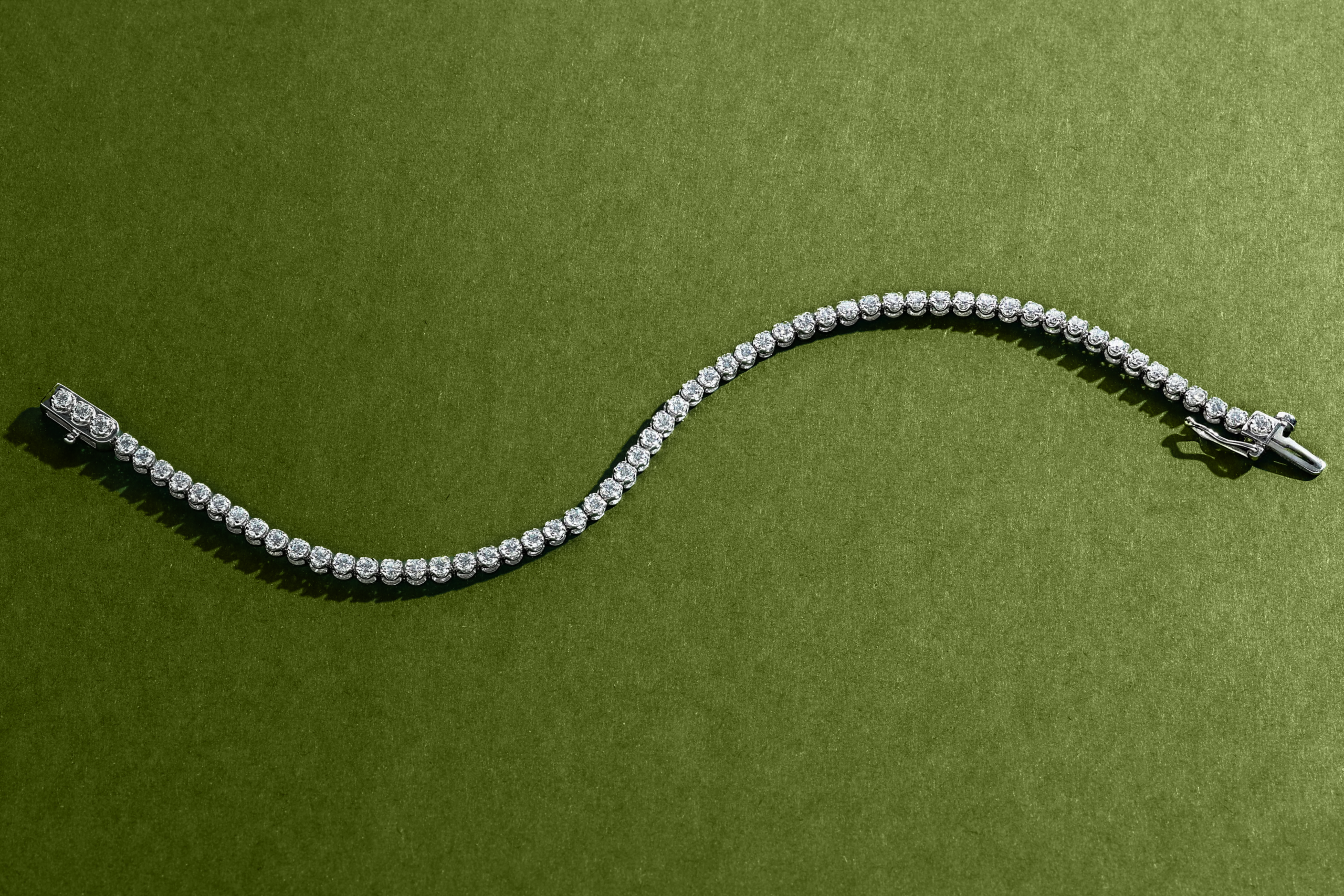
A tennis bracelet is a bracelet made with a continuous row of individually set diamonds or gemstones connected by flexible links. This design allows the bracelet to move comfortably with your wrist while maintaining a consistent appearance. Because it pairs well with casual, professional, and formal outfits, it remains one of the most popular diamond bracelet styles.
Why Is It Called a Tennis Bracelet?
The term became widely used after the 1987 U.S. Open when professional tennis player Chris Evert stopped a match after her diamond bracelet came undone during play. The incident received widespread media attention, and the style became known as a tennis bracelet. Before then, it was commonly referred to as a diamond line bracelet.
What Makes a Tennis Bracelet Different?
Unlike a rigid bangle or cuff, a tennis bracelet is designed to flex with your wrist for a more comfortable fit. Most tennis bracelets include:
- A continuous row of diamonds or gemstones
- Flexible links that allow natural movement
- A secure clasp with an additional safety latch
- Evenly spaced stones for a balanced appearance
Diamonds are the most common choice, although colored gemstones such as sapphires, emeralds, and rubies are also available. If you plan to wear your bracelet regularly, pay close attention to the quality of the links and clasp, as these affect long-term durability.
How Much Does a Tennis Bracelet Cost?
The price of a tennis bracelet is determined by its total carat weight, diamond quality, metal type, setting style, and overall construction. Understanding how these factors affect cost can help you compare different bracelets more effectively. If you are considering diamonds, lab grown and mined diamonds share the same physical, chemical, and optical properties, while lab grown diamonds are typically available at a lower price for comparable quality.
How to Choose the Right Tennis Bracelet
Choose a Diamond Shape
The diamond shape affects both the bracelet’s overall appearance and how the diamonds appear across the wrist.
Shape | Best For |
Round | Classic, balanced appearance |
Oval | Longer appearance with fewer stones |
Emerald Cut | Step-cut facets and clean lines |
Princess | Square shape with a modern look |
Select a Setting Style
The setting influences both appearance and durability.
- Prong Setting: Uses minimal metal while exposing more of each diamond.
- Bezel Setting: Surrounds each diamond with metal for added protection.
- Channel Setting: Holds diamonds between metal walls for a streamlined appearance and added security.
If you plan to wear the bracelet frequently, choose a setting that balances appearance with durability.
Pick the Right Metal
Metal | Characteristics |
White Gold | Bright finish that pairs well with colorless diamonds |
Yellow Gold | Available in different gold purities and finishes |
Rose Gold | Offers a distinct color compared with traditional gold |
Platinum | Durable, naturally white, and resistant to wear |
Platinum naturally retains its white color over time, while white gold may require occasional rhodium plating to maintain its finish. If you regularly wear other jewelry, choosing the same metal can create a coordinated look.
Choose the Right Fit
A tennis bracelet should fit securely while allowing slight movement on your wrist. A bracelet that is too loose may catch on clothing or other objects, while one that is too tight can become uncomfortable during daily wear. Many jewelers recommend leaving enough room to comfortably fit one finger between the bracelet and your wrist.
Should You Stack a Tennis Bracelet?
Yes, but a simple stack usually looks better than multiple statement pieces. A tennis bracelet pairs well with:
- One delicate chain bracelet
- A slim gold bangle
- A minimalist watch
- Leaving some space between bracelets also helps prevent unnecessary wear from constant contact.
Is a Tennis Bracelet Worth Buying?
A tennis bracelet is worth buying if you want jewelry you can wear regularly for different occasions. It is commonly chosen for:
- Everyday wear
- Anniversaries and milestone gifts
- Bridal jewelry
- Formal occasions
When comparing options, look beyond appearance. Diamond quality, total carat weight, setting security, clasp construction, and overall craftsmanship all influence how well the bracelet performs over time.
Final Thoughts
A tennis bracelet combines flexibility, comfort, and durability in a design that works for many occasions. Before making a purchase, compare diamond quality, total carat weight, metal type, setting style, clasp security, and bracelet construction. Reviewing these factors together can help you choose a bracelet that fits your budget and how you plan to wear it. Grown Brilliance offers tennis bracelets in a range of diamond shapes, carat weights, and precious metals, making it easier to compare options based on your preferences.
FAQs
- How should a tennis bracelet fit?
A tennis bracelet should sit comfortably on your wrist while allowing slight movement. Most jewelers recommend leaving enough room to fit one finger between the bracelet and your wrist. - Can you wear a tennis bracelet every day?
Yes. A well-made tennis bracelet with secure links and a safety clasp is suitable for everyday wear when properly cared for. - Are lab grown diamond tennis bracelets a good option?
Yes. Lab grown diamonds have the same physical, chemical, and optical properties as mined diamonds and can provide better value within the same budget. - What metal is best for a tennis bracelet?
The best metal depends on your preferences, budget, and lifestyle. Platinum offers excellent durability, while gold provides several color options at different price points. - What should I check before buying a tennis bracelet?
Compare the total carat weight, diamond quality, metal type, setting style, clasp security, and overall construction to help choose a bracelet suited to your needs.