Few gemstones have remained as consistently popular as sapphire. As September’s official birthstone, sapphire has centuries of history behind it, yet it continues to appear in modern jewelry collections today. The gemstone’s long-standing appeal comes from a combination of rich color, symbolism, and wearability. Sapphire is also one of the most recognizable colored gemstones in the world, with blue sapphire remaining among the most sought-after varieties.
Why Sapphire Became September’s Birthstone
The tradition of assigning gemstones to specific months dates back centuries, but the modern birthstone list used today was standardized by Jewelers of America in 1912.
The sapphire birthstone was a natural fit for September because the gem had already built a strong reputation through history. It was associated with sincerity, wisdom, faithfulness, and nobility long before birthstones became commercially standardized.
Another common explanation ties the pairing to sapphire’s long association with clarity and truth, qualities that suited a month marking the shift from summer into autumn.
The History of Sapphire Across Cultures
Sapphire has appeared in royal, religious, and ceremonial jewelry for centuries. While ancient Persians believed the sky’s blue color came from sapphires reflecting beneath the earth, ancient Greeks and Romans believed blue sapphires offered protection. Members of the clergy in ancient times wore sapphire pieces as symbols of heaven and spirituality. Throughout history, sapphire has been associated with prestige, wisdom, and truth.
The gemstone’s royal reputation continues today. One of the most recognizable examples is the sapphire engagement ring first worn by Princess Diana in 1981 and later by Catherine, Princess of Wales, in 2010.
Sapphire Jewelry Today
While sapphire remains September’s birthstone, its popularity extends well beyond birthday gifts. The gemstone appears in a wide variety of jewelry categories.
Rings
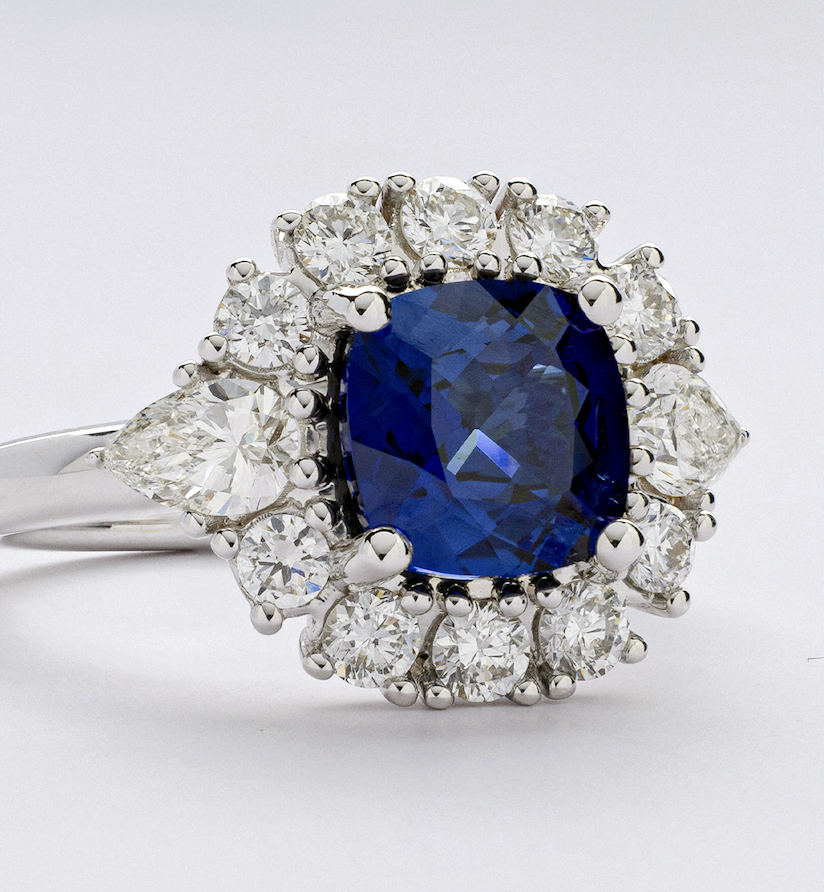
Sapphire rings are often chosen by shoppers looking for a colored center stone. If you are inspired by Princess Diana, a design such as the Daffodil Sapphire Engagement Ring can be a good option. The ring combines an oval-cut sapphire with diamond accents to create a halo effect, which adds contrast while keeping the center stone as the focal point.
Earrings
Sapphire earrings offer a straightforward way to incorporate color into everyday jewelry. Sapphire earrings are one of the easiest ways to incorporate the gemstone into everyday wear. Studs, in particular, remain one of the most versatile sapphire styles because they work equally well with casual outfits, professional attire, and formal occasions. The Sapphire Cushion Studs offer the familiarity of classic studs while introducing sapphire’s distinctive color in a design that works well beyond September.
Bracelets
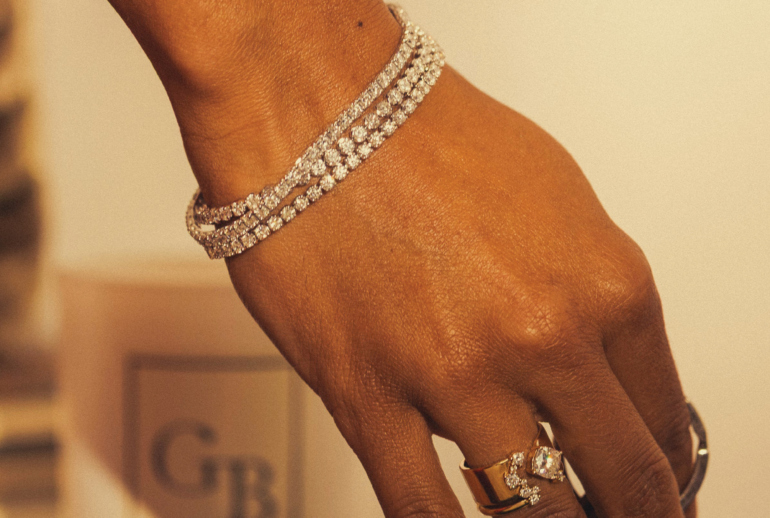
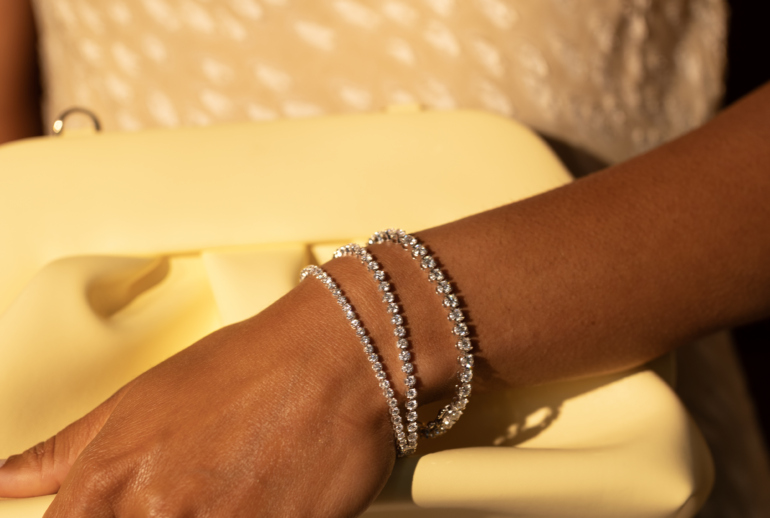
For those who prefer subtler gemstone jewelry, bracelets can be an effective option. They let you incorporate sapphire into a jewelry collection without committing to a larger gemstone focal point. The Sapphire and Diamond Tennis Bracelet is one example of a design that distributes color throughout the piece without making the gemstone the sole focus.
Necklaces
Sapphire birthstone necklaces remain one of the easiest styles to wear regularly. Because they sit close to the face, they can introduce color without dominating the rest of an outfit and often layer well with other jewelry. The Sapphire Chevron Necklace, for example, is a lightweight piece that adds color while still pairing comfortably with a variety of necklines and outfits.
These styles are available in lab grown sapphire, which shares the same chemistry, hardness, and color range as the mined stone, usually with more flexibility in size and price.
How to Style Sapphire Jewelry Beyond September
One reason sapphire remains relevant year after year is its versatility.
- Blue sapphire works naturally with denim, making sapphire earrings or necklaces an easy addition to casual outfits.
- The stone also pairs well with neutral colors such as black, camel, gray, and white, where its color can stand out without overwhelming the look.
- White metals such as platinum and white gold emphasize sapphire’s cooler tones, while yellow gold creates stronger contrast and a more traditional appearance.
- Layering can also help sapphire feel less formal. A sapphire necklace layered with simpler chains or a sapphire bracelet paired with everyday jewelry can make the gemstone feel more approachable outside of special occasions.
- When layering, keep sapphire to one focal point, such as a sapphire pendant paired with plain gold chains, rather than another colored stone. This creates a balanced, intentional look.
Rather than reserving sapphire for September, you can incorporate it into year-round wardrobes because it works in both casual and formal settings.
FAQs
1. Why is sapphire associated with September?
Sapphire became September’s birthstone when the modern birthstone list was standardized in 1912. Its long-standing associations with wisdom, sincerity, and nobility contributed to its selection.
2. Can sapphires be worn every day?
Yes. Sapphire ranks 9 on the Mohs hardness scale. This makes it one of the most durable gemstones used in jewelry and suitable for regular wear.
3. What does sapphire symbolize?
Historically, sapphire has been associated with truth, loyalty, wisdom, sincerity, and protection. Different cultures have attributed similar meanings to the gemstone for centuries.
4. Are lab grown sapphires real sapphires?
Yes. Lab grown sapphires share the same chemical composition and crystal structure as natural sapphires. The primary difference is how they are created.