When choosing an engagement ring, a question that often comes up is: Should the ring be custom-made or ready-made? Both options can result in a beautiful, well-made ring. The better choice depends on how specific your design preferences are, how quickly you need the ring, and how involved you want to be.
A ready-made ring offers a simpler buying experience, while a custom ring gives you greater control over details such as the setting, metal, and diamond selection. Understanding the difference can help you decide with greater confidence.
Custom vs. Ready-Made Engagement Rings at a Glance
Consideration | Custom Engagement Ring | Ready-Made Engagement Ring |
Design control | High | Limited to available designs |
Personalization | Extensive | Usually limited |
Buying process | More involved | Faster and simpler |
Timeline | As fast as 14 days | 1–6 business days if in stock |
Budget control | Can vary widely (depending on the complexity of the design) | Easier to compare upfront |
Design selection | Built around your preferences | Choose from existing styles |
Best for | Specific or unique design ideas | Quick, straightforward purchases |
Neither option is automatically better. The right choice depends on what matters most to you.
What Is a Custom vs a Ready-made Engagement Ring?
A customized engagement ring is designed around your preferences. You can choose details such as the setting, metal, center stone, proportions, and accent stones. This option works well if you have a specific design in mind.
A ready-made engagement ring features an existing design that is already produced or available to order. It suits shoppers who are clear on their preference and want an easier way to compare settings, metals, diamond shapes, and prices without making extensive changes.
Custom vs. Ready-Made: Which Is Better for Your Budget?
Price depends on the diamond, metal, setting, accent stones, craftsmanship, and retailer, in addition to whether the piece is custom or ready-made.
Custom designs may include additional fees, while ready-made rings often have clearer upfront pricing. However, customization does not always cost more.
For example, prioritizing a particular diamond shape or carat weight may affect the overall budget more than choosing a custom or ready-made design. Looking at the complete combination of diamond, setting, and metal is often more useful than comparing design approaches alone.
How Lab Grown Diamonds Fit Into Custom and Ready-Made Rings
The choice between a custom and ready-made ring does not limit the type of diamond you can select. Lab grown diamonds can be incorporated into either option, which allows shoppers to compare styles, settings, and specifications based on their priorities.
When choosing lab grown diamond engagement rings, the same core factors can be considered, including:
- Cut
- Color
- Clarity
- Carat weight
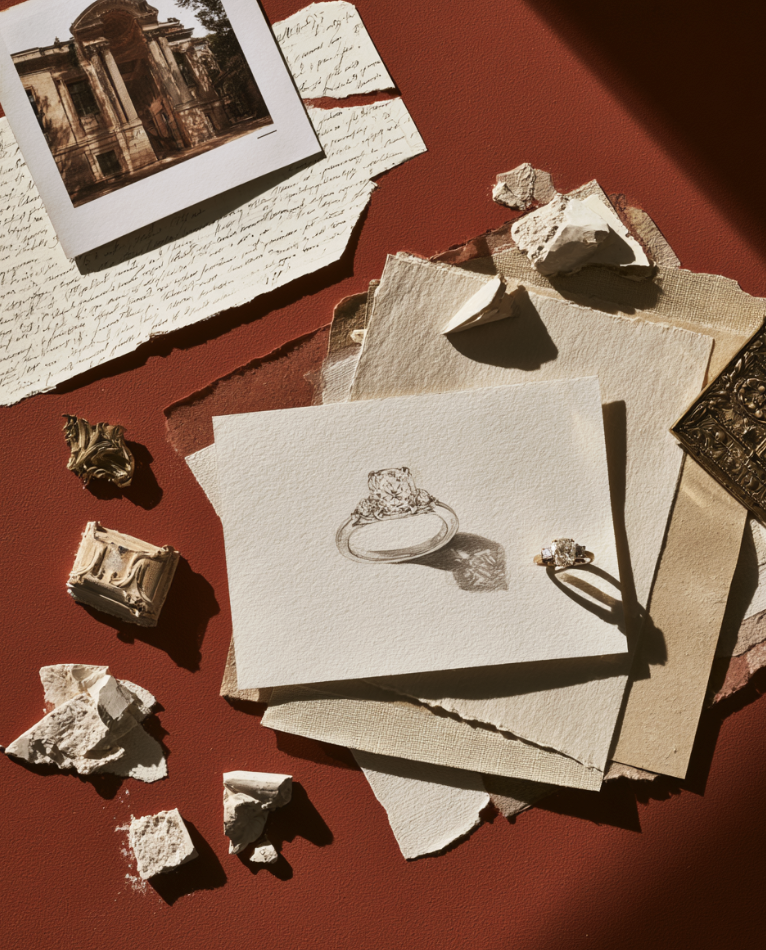
If you have a specific design in mind, Grown Brilliance’s GB Custom service lets you create a custom piece suited to your preferences. All you have to do is upload the inspiration behind your design, get 3D renders, and have the custom-made ring delivered in as little as 14 days.
How to Design an Engagement Ring Without Overcomplicating It
If you decide to design an engagement ring, start with the elements that have the biggest visual impact.
1. Choose the diamond shape
The shape establishes much of the ring’s overall character. Popular choices include:
- Round
- Oval
- Cushion
- Emerald
- Pear
- Marquise
- Radiant
- Princess
2. Select the setting
The setting determines how the center diamond sits within the ring. Consider whether you prefer:
- Solitaire
- Halo
- Three-stone
- Pavé
- Bezel
- Cathedral
3. Pick the metal
Common metals for engagement rings include platinum, yellow gold, white gold, and rose gold. Your choice can affect the ring’s appearance and maintenance requirements. If the wearer already owns jewelry they wear regularly, matching or complementing those metals can help create a more cohesive look.
4. Decide how much customization you actually need
Not every detail needs to be custom. Start by identifying your non-negotiables. These might include the diamond shape, metal, setting style, or band width. Then allow the remaining elements to come from an existing design if that makes the process easier.
What to Consider Before Choosing an Engagement Ring
Whichever route you choose, consider a few key factors before making your decision.
- Set your priorities first: Identify the design details that matter most, such as diamond shape, metal, setting, or band style, to narrow your options.
- Look at the diamond as a whole: Carat weight is only one factor. Consider cut quality, proportions, color, clarity, and shape as well.
- Consider how the ring will be worn: Someone who works with their hands may prefer a lower-profile setting, while someone who prefers heavy pieces may want a bolder design.
- Plan around your proposal date: If you have a specific date in mind, confirm the production and delivery timeline before ordering. Allow additional time when choosing a custom design.
FAQs
1. Is it more affordable to customize an engagement ring?
Not necessarily. Customization can add design or production costs, but your final price depends on the diamond, metal, setting, craftsmanship, and other specifications.
2. How long does a custom engagement ring take?
It can depend on the retailer.
Grown Brilliance’s GB Custom pieces can be completed in as little as 14 days after the design is finalized. More complex designs or specialty stones may require additional time. Check the estimated timeline before placing an order, especially if you have a specific proposal date.
3. Can lab grown diamonds be used in custom engagement rings?
Yes. Lab grown diamonds can be used in many engagement ring designs. They are available in different shapes, sizes, and quality characteristics, making them suitable for both custom and ready-made settings.
4. Should you choose the ring or diamond first?
There is no single rule. Some shoppers start with the diamond because it is the focal point. Others choose the setting first because it defines the overall design. Your priorities should determine the order.